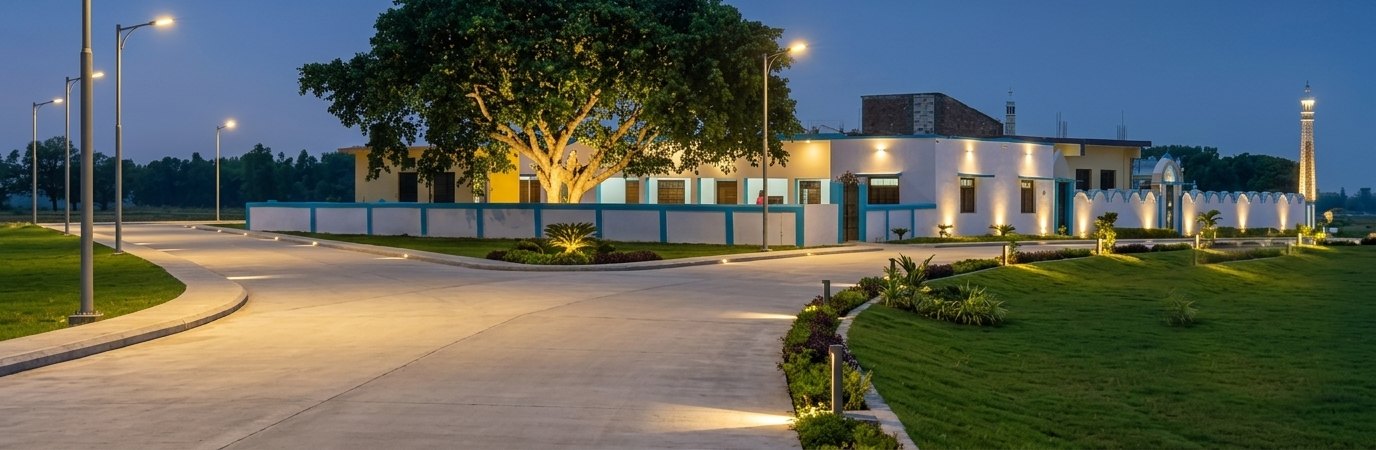

Madrasa Noorul Uloom
Qur'an and a full school education for boys and girls, Nursery to Class 5.
Yasodhara-04, Pokharbhitwa, Kapilvastu, Lumbini Province, Nepal
Teaching since 1978
- Students
- 275
- Classes
- Nursery to 5
- Sponsored children
- 48
- Teaching since
- 1978

Madrasa Noorul Uloom has taught the children of Pokharbhitwa since 1978. We are a day madarsa of 275 children, Nursery to Class 5, boys and girls.
What we promise
Three things, each one you can check for yourself — rather than excellence and discipline, which no parent can verify from a website.
- Every child is taught to read, not to recite from memory alone
- A child who has memorised a surah but cannot read it has not been taught. Reading comes first here, for every child, including those doing Hifz.
- No child is turned away over money
- Forty-eight of our 275 children have their fees met by a sponsor. The arrangement is private: the child is not told, the class is not told, and nothing about their day is different.
- The accounts are open to the families
- Every rupee in and out is written in the register — fees, donations, the electricity bill, chairs, welding. It is totalled every month and any parent may ask to see it.
The seven levels
Nursery to Class 5, one teacher to each. The roll beside every level is this year’s, so you can see the size of the class your child would join.
- Nursery3 to 4 years55children
Settling, sounds and speech
The first year in the building. The child learns to sit in a class, to hold a pencil, and to say the Arabic letters after the teacher. Nothing is written down yet.
- LKG4 to 5 years66children
Letters on paper
Writing begins — the Arabic letters from the Qaida, and the Nepali and English alphabets. Counting to fifty.
- Class 15 to 6 years68children
Qaida and joining letters
The child works through the Qaida and begins to join letters into words. In the school subjects: writing full words, and counting to a hundred.
- Class 26 to 7 years32children
Reading begins
Qaida is finished and the child begins to read short surahs. Writing sentences in Nepali and English, addition and subtraction.
- Class 37 to 8 years25children
Into the Qur'an
The child starts reading from the Qur'an itself with a teacher beside them. Tajweed starts properly. Tables, and writing a short paragraph.
- Class 48 to 9 years18children
Fluency
Reading the Qur'an without help on familiar passages. Arabic reading and writing starts. Multiplication, division and money problems.
- Class 59 to 10 years11children
Finishing well
The last year with us. Arabic grammar begins, so the child follows the meaning and not only the sound. Fractions and measurement, and enough Nepali, English and Mathematics to join Class 6 at any school in the district.
What your child learns
The deeni subjects in the morning and the afternoon, the school subjects in between. A child who finishes Class 5 here reads the Qur'an correctly and is ready to join Class 6 anywhere.

Deeni
The religious subjects
- Qur'an
- Reading the Qur'an correctly, from Qaida through to fluent recitation.
- Hifz
- Memorisation, para by para, at the child's own pace. Not every child takes this and no child is pushed into it.
- Tajweed
- The rules of pronunciation — how each letter is sounded and where to stop.
- Arabic
- Reading and writing Arabic, and enough grammar to follow what is being recited.
- Islamic Studies
- Prayer, the pillars, the life of the Prophet ﷺ, and how to behave with people.
Duniyawi
The school subjects
- Nepali
- Reading, writing and composition — the language the child will be schooled and examined in after they leave us.
- English
- Alphabet and phonics in Nursery and LKG, through to reading and writing sentences by Class 5.
- Mathematics
- Counting and tables through to fractions, measurement and simple geometry.
- Urdu
- Reading and writing, for families who use it at home.
- General Knowledge
- The world around the child — the country, the body, plants, weather, safety.

“And say: My Lord, increase me in knowledge.”
Surah Ta-Ha, 20:114
A day at the madarsa
Qur'an first, while the children are fresh. School subjects through the middle of the morning. Prayer and lunch together, then the deeni subjects until two.
6:30 – 7:30 am
Morning Qur'an
Recitation and memorisation, before the school subjects and while the children are fresh.
7:30 – 8:00 am
Breakfast and rest
Children bring their own breakfast. Drinking water is provided.
8:00 – 11:30 am
School subjects
Nepali, English, Mathematics, Urdu and General Knowledge, taught by class.
11:30 am – 12:15 pm
Zuhr and lunch
Prayer together, then lunch in the courtyard.
12:15 – 2:00 pm
Deeni subjects
Tajweed, Arabic and Islamic Studies. Revision of the morning's Qur'an lesson.
A look around
Come during office hours and someone will walk you round it properly — no appointment, and no form to fill in first.

The courtyard
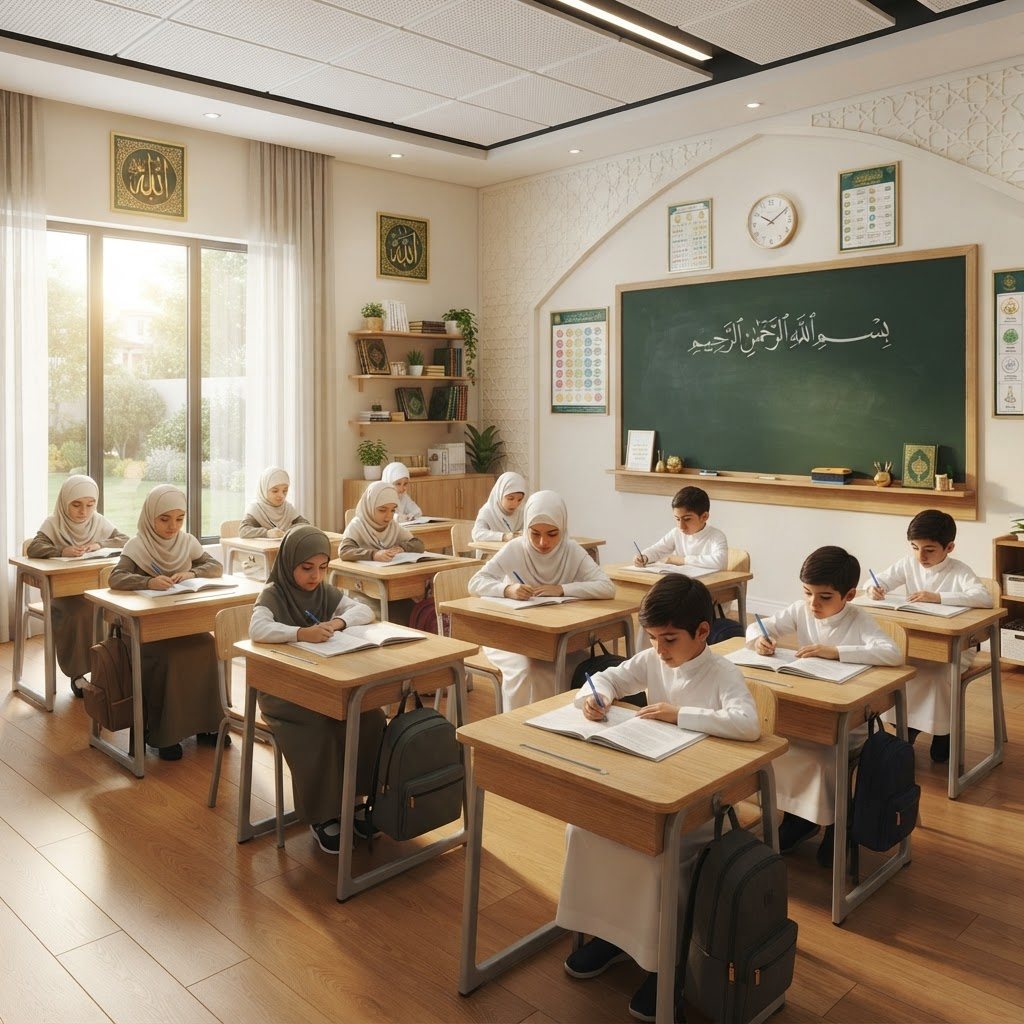
A classroom
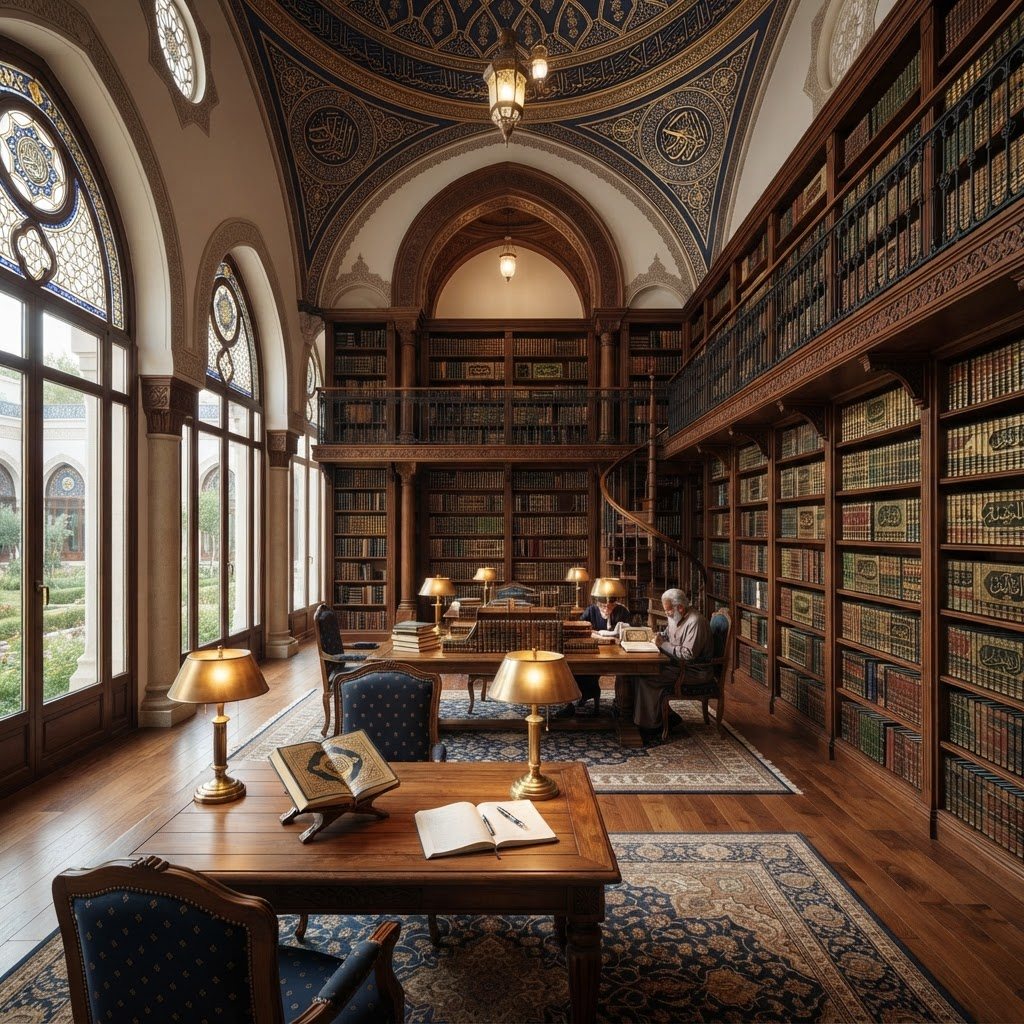
Books and the reading room

The grounds

The veranda
What it costs
The whole year
Rs 4,000
The same for every class, Nursery to Class 5. There is no separate admission fee, examination fee or annual charge.
Paid in 4 installments
Rs 1,000
- Due
- 15 August
- Due
- 15 November
- Due
- 15 February
- Due
- 15 May
A receipt is written for every payment.
Fees met by a sponsor
48
of our 275 children. If you cannot pay, say so at the office. It is dealt with quietly — the child is not told, the class is not told, and nothing about their day is different.
How a child is admitted
The year runs from August to May. Admissions open before it starts, and we take children through the year where there is room in the class.
- 1
Come and see the madarsa
Visit during office hours. No appointment is needed. Ask to see the classroom your child would sit in, and meet the teacher.
- 2
Fill the enquiry form
Use the form on this page or collect a paper form from the office. We will call you back on the number you give us.
- 3
Bring the child in
A short sitting with a teacher, to find the right class. This is not a test to pass or fail — a child who has never studied starts at Nursery, which is what Nursery is for.
- 4
Complete the admission
Bring the documents below and the first installment. The child is entered in the register with their own student number and can start the next working day.
Come and see it for yourself
Visit during office hours — no appointment, no form to fill first. Ask to see the classroom your child would sit in, and meet the teacher who would take them. Sunday to Friday, 8:00 am to 2:00 pm.